
“The heaviest of burdens is therefore simultaneously an image of life’s most intense fulfillment. The heavier the burden, the closer our lives come to earth, the more real and truthful they become.”
– Milan Kundera in The Unbearable Lightness of Being. 1984
In The Unbearable Lightness of Seeing, I am exploring the physical and psychological distance we maintain between ourselves and the weight of reality. The work is built around a simple, almost instinctual human behavior: the urge to move closer to a screen to see more clearly. The physical orientation of the objects creates a forced intimacy—a choreographed movement that mirrors the psychological weight of the content.
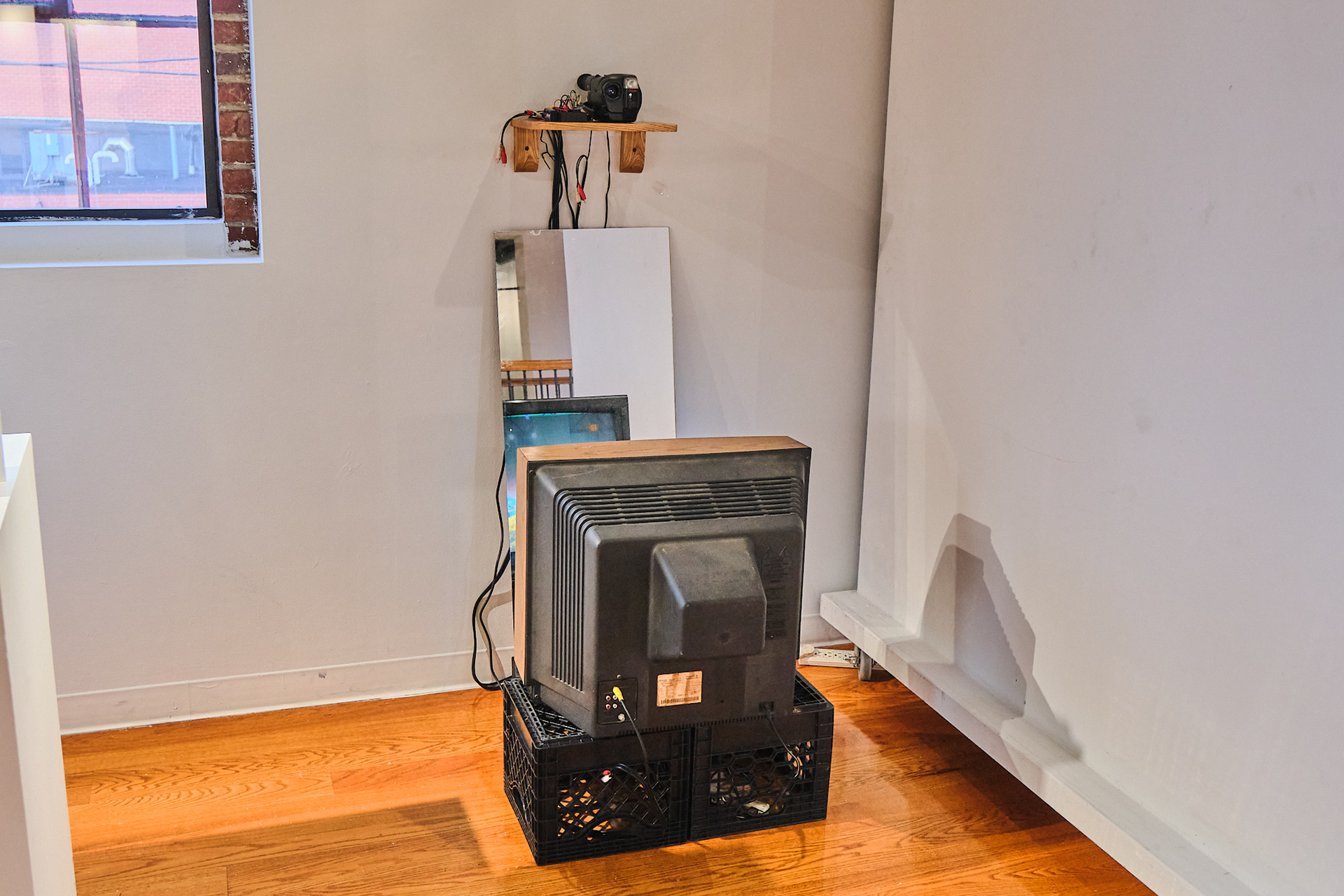
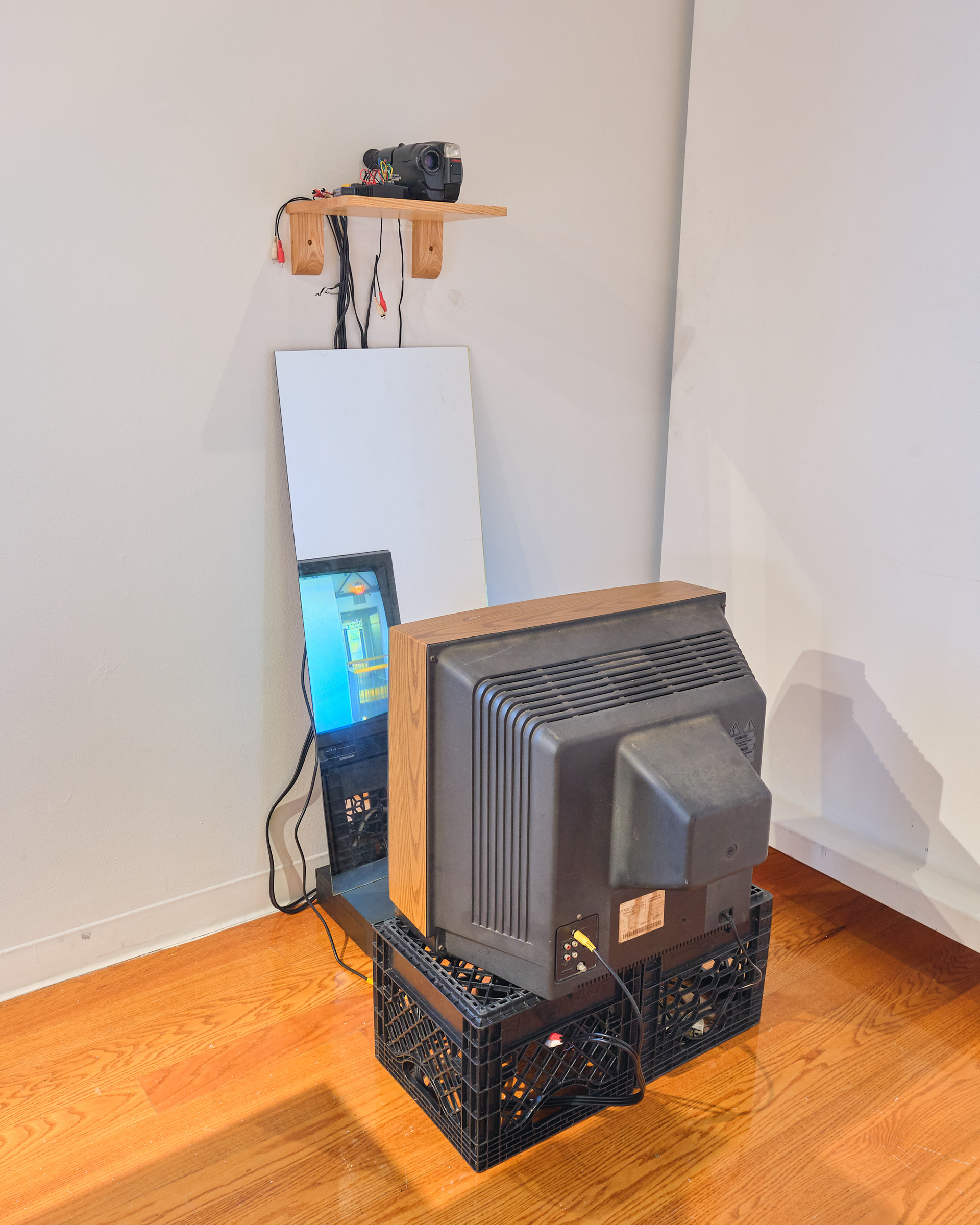
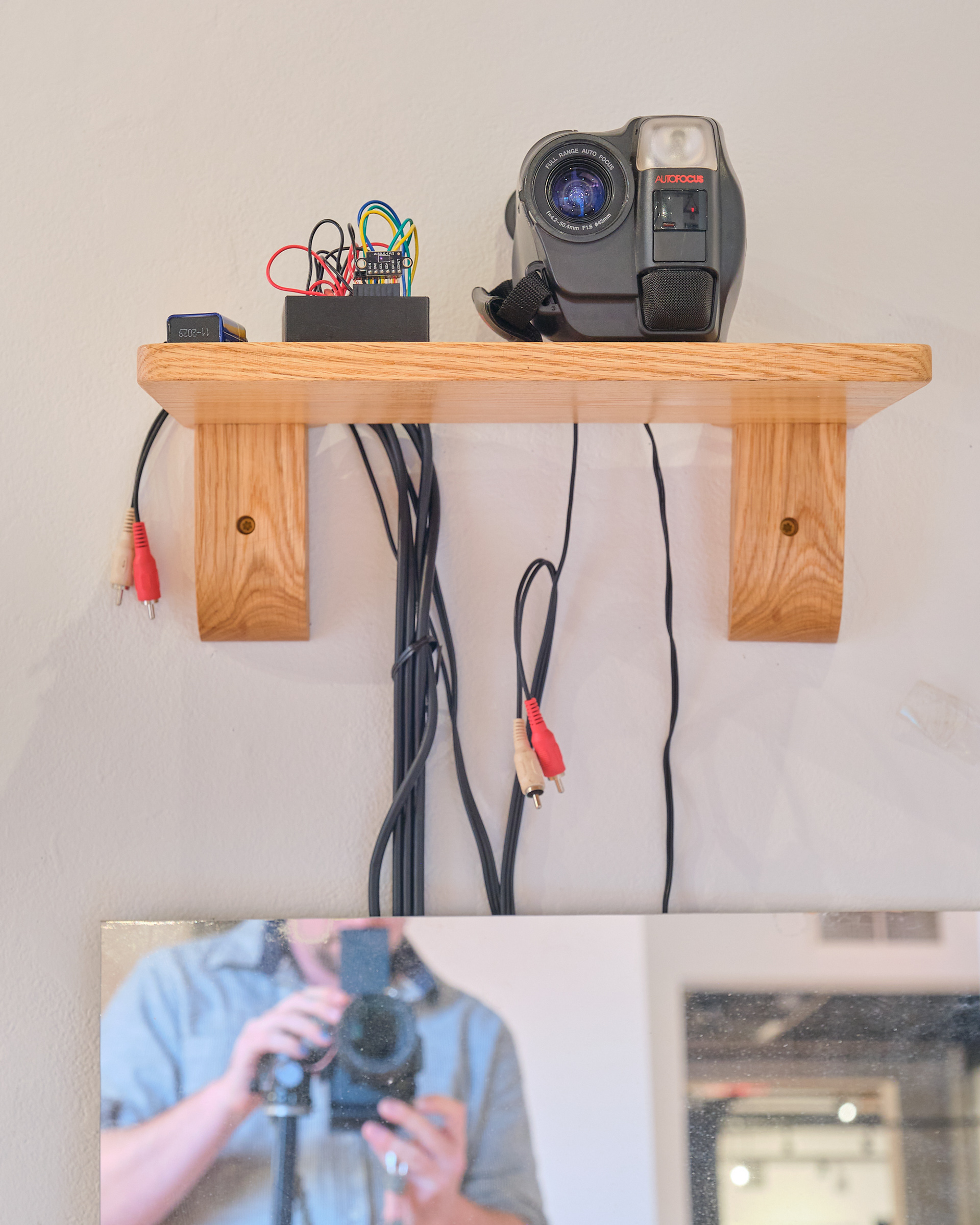
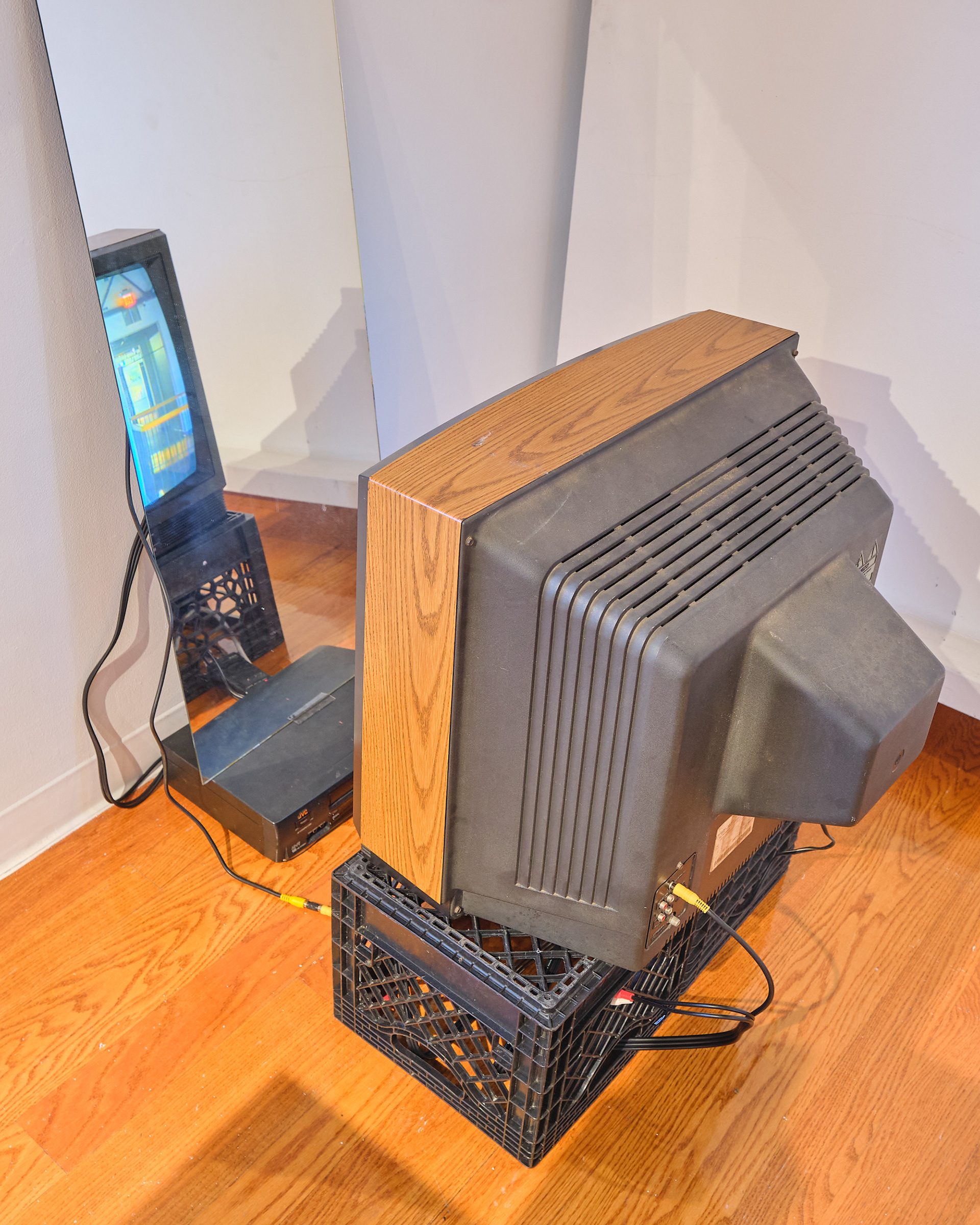
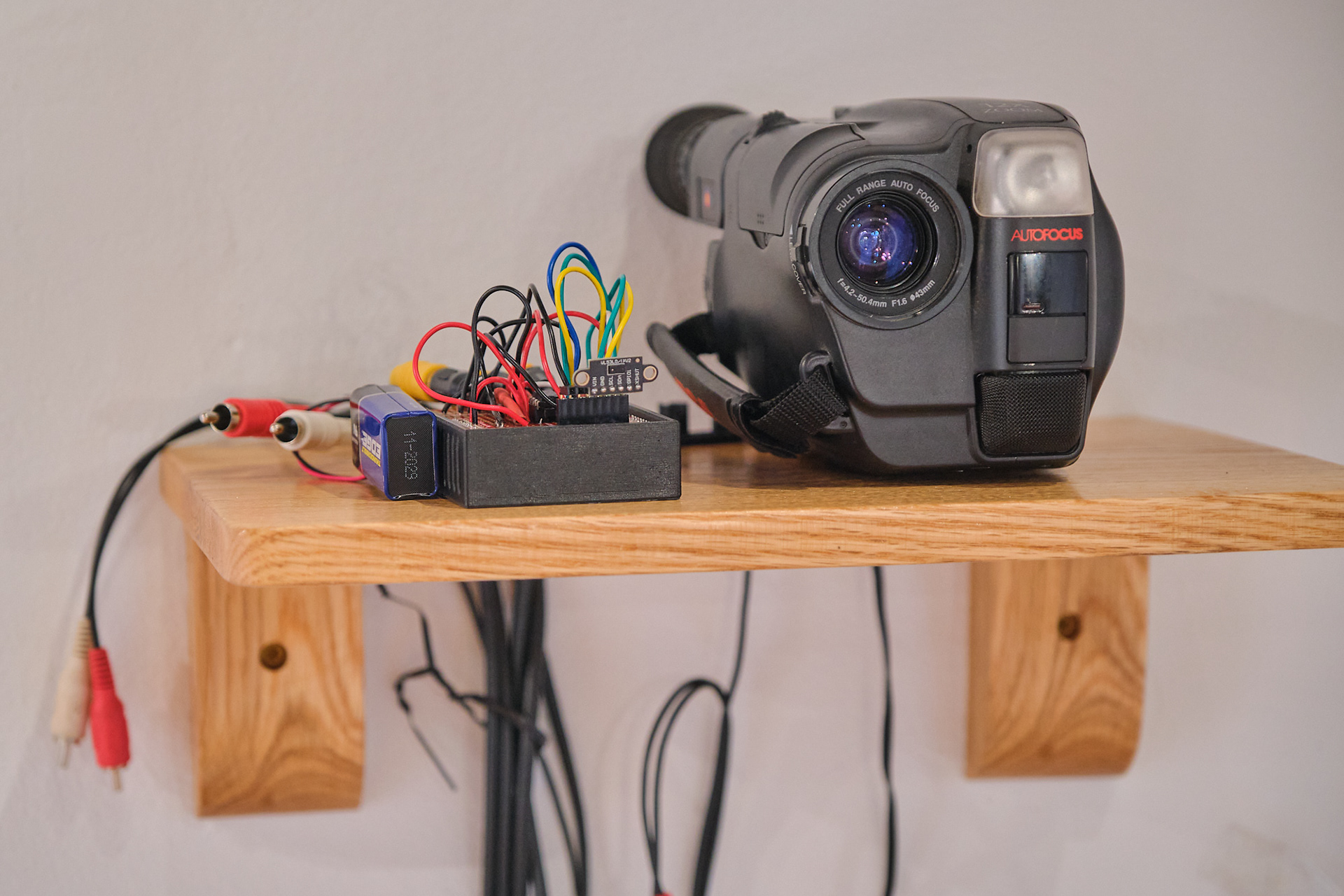
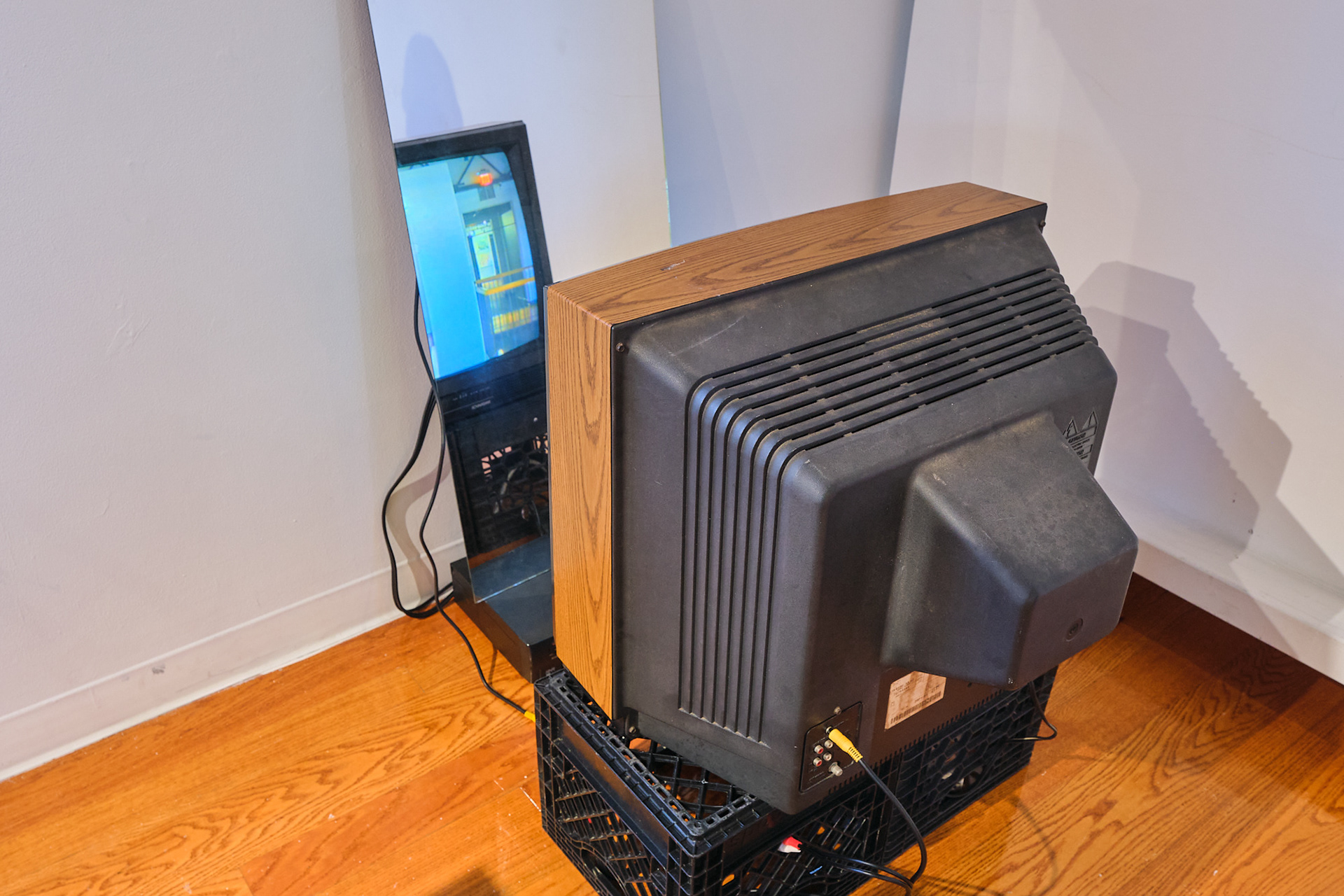
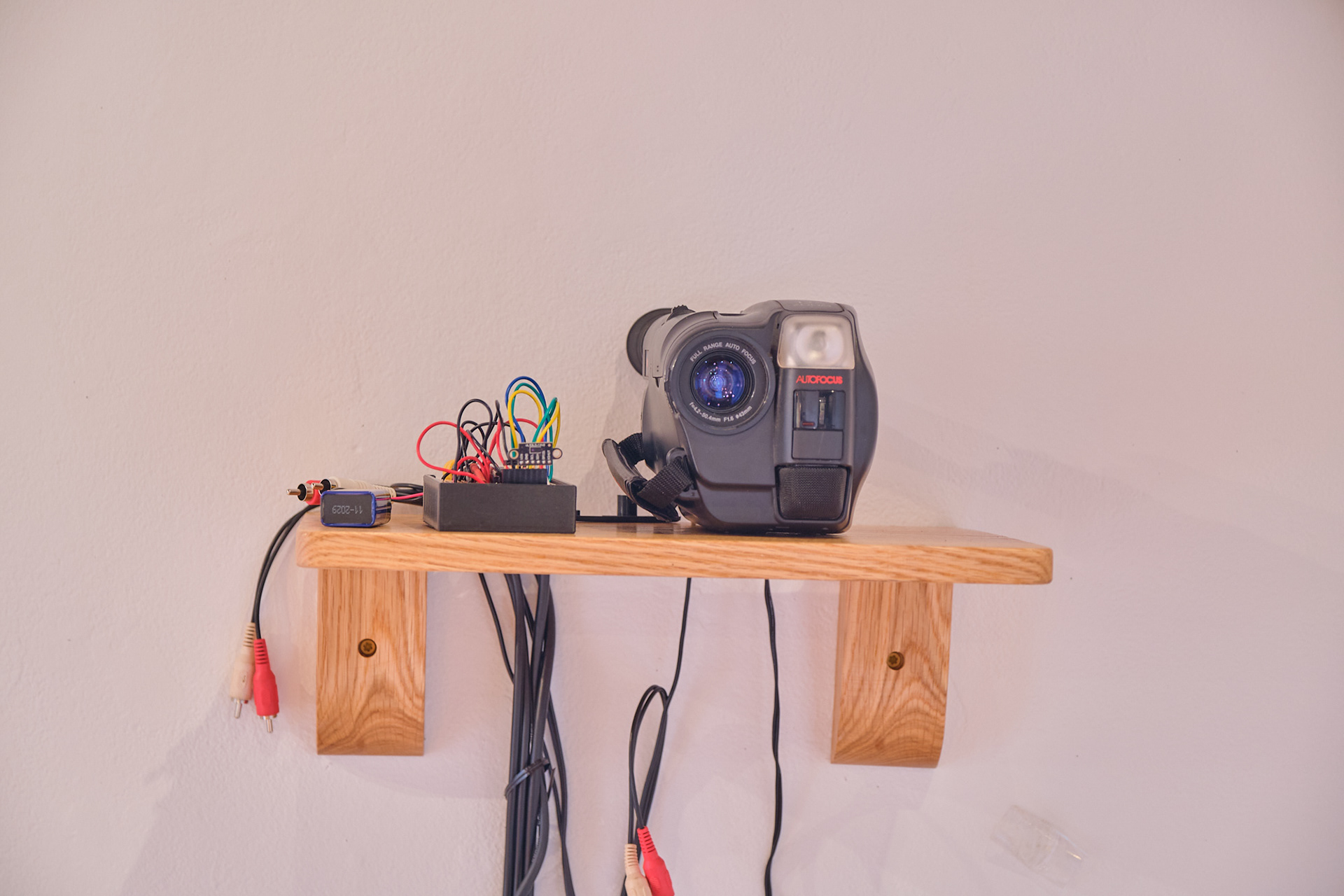
In the current iteration, I use a single CRT television sitting close to the ground on milk crates—objects that carry their own nostalgic heaviness. The piece is powered by an Arduino and an ultrasonic proximity sensor, which acts as a mediator between the viewer and the image. Two video streams are feed to the TV, a VHS tape and a camcorder pointed at the viewer.
The TV is turned away from the viewer, facing a mirror. From a distance, you are not looking at a screen; you are looking at yourself. You see your own reflection in the mirror, an image of "lightness" that demands nothing of you. The mirror acts as a barrier and a gateway, reflecting the easy, self-centered curiosity of the viewer. But as you cross a certain threshold of proximity, the signal glitches. The "ghost in the machine" emerges through temporal chaos and scanning lines, and the image of yourself is replaced by a montage of found footage. To actually see the film, you cannot remain a distant observer. You must physically navigate the space, moving close to the back of the television set. This movement is counter-intuitive; you are approaching the machinery—the plastic casing, the wires, the heat—rather than the "image."
Only when you are standing directly over the tv, looking down into the reflection of the glass, does the movie reveal itself. This downward gaze is a physical enactment of the Kundera quote:
"The heavier the burden, the closer our lives come to the earth, the more real and truthful they become."
The film itself is a dense, non-linear archive of what it means to be alive. The film is of found footage: family home videos (the most intimate and light), documentaries about life on Earth, music videos, and AI-generated video that represents the newest, most ethereal "ghost" in our machine.
By blending these with scenes of industrial horror and profound joy, I am creating a signal that oscillates between the lightest and heaviest moments of existence. The AI footage specifically highlights the "unbearable lightness" of our modern era—images that exist without a physical body—contrasted against the visceral, grainy reality of home movies and documentaries. By standing close enough to see the truth, you lose the safety of the distance. The clarity of the "problem" is inversely proportional to your comfort.
The physical act of looking down into the reflection—seeing life, death, and your own presence all tangled together—removes the safety of the "viewer" role. You are no longer just watching a screen; you are looking into a well of collective memory, seeing the fragile, decaying signal of humanity that we only truly notice when we are brave enough to stand inches away from it.
The use of CRT technology is intentional. The flicker and the analog artifacts serve to disrupt the seamless, high-definition illusions we are accustomed to in the digital age. These glitches reveal the fragility of the signal, reminding us that our understanding of the world is often a decaying transmission.
The video is not meant to be watched chronologically nor in its entirety. It isn't a film; it’s an encounter. Much like life, these moments can only be witnessed if you are physically present and willing to lean in. If you step back, the truth vanishes, and you are left once again with the lightness of the surface.